The tech industry wants you to think your deadbolt is an afterthought. We've been proving them wrong for over a decade.
There's a narrative quietly spreading through the home security world, and it's time to address it directly.
You've probably heard some version of it: locks are old technology. The real threats are digital. Your front door matters less than your Wi-Fi password. It shows up in smart home ads, in tech blogs, in the breathless "2026 Security Trends" roundups that treat a deadbolt like something nobody needs to think about anymore.
We're locksmiths. We've been serving the DMV since 2012. And we're here to tell you: the people pushing this narrative have never stood on a porch at 2 a.m. with a homeowner who just got broken into.
Physical locks aren't the last line of defense. They're the first. And if your first line fails, no amount of AI-powered camera analytics is going to stop what happens next.
Where the Myth Comes From
The security tech industry isn't entirely wrong — the threat landscape has expanded. In 2026, a comprehensive security posture really does mean thinking about your router, your smart devices, your camera subscriptions, your passwords. These things matter.
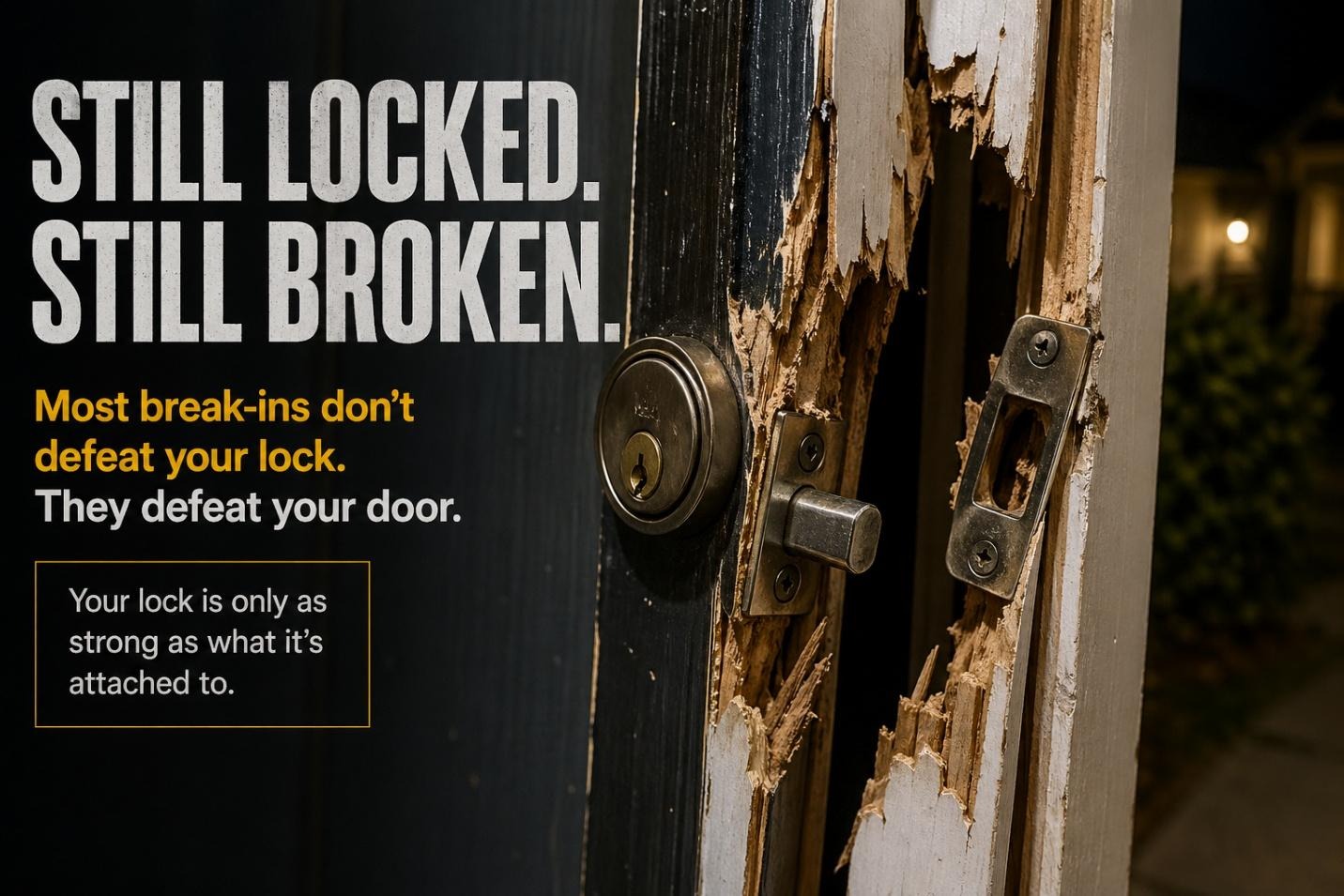
But here's what gets quietly glossed over: the majority of residential break-ins are still old-fashioned. Someone tries the door. If it opens — or gives way with a kick — they're in. Full stop. No AI detection is going to stop a body in motion through an already-open door frame.
The "locks are secondary" framing benefits companies selling subscriptions, cameras, and monitoring services. It doesn't benefit you — the homeowner who may be pouring money into a beautiful camera system while your strike plate is held in with half-inch screws.
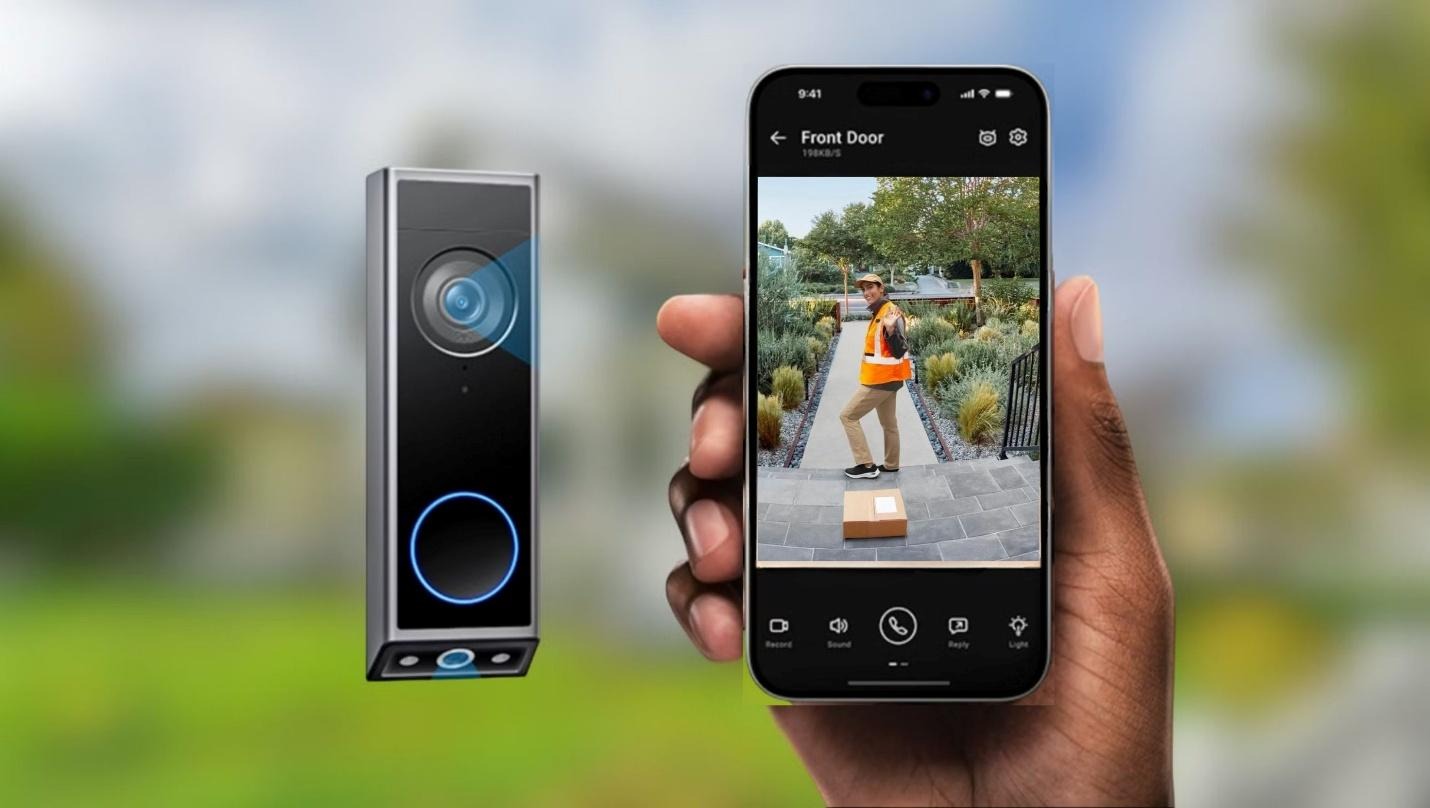
We get calls from people with $400 video doorbells and hollow-core doors. The camera filmed the whole thing perfectly.
What "First Line of Defense" Actually Means
When we talk about physical locks as your first line, we're not being sentimental about deadbolts. We're talking about a layered security model — the same model every serious security professional uses — where you work from the outside in.
The outermost layer is physical deterrence and barrier. This is your lock, your door, your frame, your hinges. If this layer holds, an opportunistic intruder moves on. They are, overwhelmingly, opportunistic. They're not hackers. They're not professionals. They're looking for the easiest door on the block.
If the first layer fails, then — and only then — does your second layer become relevant: cameras, motion sensors, alarms. And your third layer kicks in after that: monitoring, police notification, response.
The tech industry has convinced a lot of homeowners to invest heavily in layers two and three while quietly neglecting layer one. It's a little like buying an excellent car alarm for a car with no door locks.
What We See in the Field
These aren't hypotheticals. They're what we encounter regularly on job sites across Maryland, Virginia, and DC:
Builder-grade locks on brand-new construction — ANSI Grade 3 hardware that would fail a real kick test. Strike plates secured with ¾-inch screws into soft wood instead of the stud. Hollow-core interior doors being used as entry doors in townhouses and apartments. Smart locks installed on doors with compromised frames — the technology is fine; the door around it isn't. Double-cylinder deadbolts installed without a plan for emergency egress — a safety hazard dressed up as security.
The Smart Lock Conversation Nobody's Having
Smart locks are genuinely useful. Keypad entry, remote locking, access logs, temporary codes for contractors — these are real improvements, and for the right household they're worth every penny.
But the marketing around smart locks has created a dangerous perception: that upgrading to a connected lock means upgrading your security. It doesn't — not automatically. What you've upgraded is your convenience. The security upgrade comes from what's underneath: the lock grade, the door construction, the frame reinforcement, the hinge hardware.
A quality digital lock on a solid-core door with a reinforced strike plate and 3-inch screws into the stud? Excellent security. The same digital lock on a builder-grade hollow door with the original strike plate? You have a very expensive device on a very kickable door.
We do a lot of smart lock installations. The conversation we have most often isn't about the technology. It's with a homeowner who, in the course of the installation, finds out for the first time that their door situation isn't what they thought it was.
What an Actual Layered Approach Looks Like
This isn't an argument against cameras, AI detection, or monitoring subscriptions. It's an argument for doing things in the right order.
Before investing in any digital security upgrade, answer these questions about your physical situation:
Your lock: Do you know your lock's ANSI grade? Grade 1 is residential best. Grade 3 is builder standard. Most homes have Grade 3. The price difference between them is often less than one month of a monitoring subscription.
Your strike plate: Is it secured with 3-inch screws into the stud, or the original hardware? This is a $10 fix that dramatically changes your door's resistance to forced entry. A locksmith can handle it in under an hour.
Your door: Solid core or hollow core? Hollow-core doors are interior doors. They have no business serving as exterior or unit-entry doors — but they turn up constantly in townhouses and apartments.
Your frame: Door frames crack and settle. A door that looks closed and locked may not be providing the barrier you think it is.
Once those answers are solid, then invest in the camera. Then add the smart lock for convenience. Then consider the monitoring plan. The layers work — but only in order.
A Note on Digital Security
We're not dismissing the digital angle — it's real. Your smart home devices are entry points. Your lock's app has a password. Your camera footage lives in the cloud. These things deserve attention.
But here's our honest assessment after over a decade in this field: the people most at risk from digital home security vulnerabilities are generally not the same people most at risk from physical break-ins. Digital attacks tend to target specific individuals or exploit mass vulnerabilities. Physical break-ins are overwhelmingly opportunistic and local.
If you live in a neighborhood where car break-ins happen, where shed doors get tested, where porch packages occasionally disappear — your primary threat is physical. Start there.
Not Sure Where Your Home Stands?
Mike's Locksmith has been serving homes and businesses across Maryland, Virginia, and DC since 2012. We offer honest security assessments — no upsells, no scare tactics. Just a real look at what your door situation actually is and what, if anything, needs attention.
Because there's a difference between feeling secure and being secure. We help you get to the second one.
📞 202-290-4339 / 571-436-3160 🌐 www.mikes-locksmith.com
Let Mike’s Locksmith Make It Easy
We have professional experience in designing and installing low-budget access control systems for homes, offices, and rental properties. If you need a single keypad or a full multi-door system, we will guide you through your options and see that it is properly installed.
Contact us today to arrange a free consultation. Access control is no longer the preserve of the big firms—it's open to anyone who values security and convenience.